
God of liberation, Your forgiveness surpasses any grievances between us. Grant us the courage to forgive others and strive for peace through our kind words, sharing generously, and adhering to Your call for goodness. Amen.
The tale of the unforgiving servant can be challenging to comprehend. It concludes a section of Matthew's Gospel where Jesus highlights the significance of relationships within the Christian community, constantly emphasizing that the well-being of this community—God's family—is paramount. Those who wish to be part of it must actively work to cultivate and enhance their love for each other.
Listening to Jesus, Peter grows concerned about the expectations placed upon him. He asks, “Lord, how many times should I forgive my brother who sins against me? Is seven times enough?” He likely perceives seven as a considerable amount.
Jesus replies, “I tell you, not seven times, but seventy times seven.” This signifies that forgiveness knows no bounds; forgiving those who wrong us is not merely a singular event but an ongoing process. It's about making forgiveness a regular practice, not just tallying the instances.
Consider this: Forgiving once can be quite tough. Suppose you arranged a lunch with a friend, made significant efforts to arrive on time, only to find they forgot. After feeling disappointed and waiting, they call later to apologize and ask to reschedule. But if this happens again, would you want to meet up a third time? Are you ready to endure this cycle 490 more times? Most likely not. While many may forgive once or twice, by the third occurrence, they often hesitate.
We frequently discuss forgiveness in church, but we must recognize its vital importance. Genuine friendships, familial bonds, and strong marriages rely on forgiveness. However, extending forgiveness can be incredibly difficult. Letting go of pain—especially when it has significantly shaped our identity as a victim—can be hard.
A minister once shared a poignant story about a six-year-old boy who accidentally breaks his mother’s cherished vase after being warned not to run indoors. The father dismisses it lightly, but the mother sorrowfully explains the vase's value, shedding tears. Ultimately, both the boy and the mother embrace each other. the minister ponders, “Who truly forgave here, the father or the mother?”
Forgiveness acknowledges the past while consciously choosing to break the cycle of anger and bitterness. It doesn’t mean pretending we aren’t hurt. If we minimize our pain, true forgiveness becomes unattainable. Forgiveness is a deliberate decision to release the individual who has wronged us from our judgment, even if we feel justified in holding onto it.
A pastor recounts a meeting with a single mother trying to support her three children after her husband’s departure. She expresses her frustration about his carefree life while hers is filled with struggle. The pastor tells her, “I’m not asking you to forgive him because what he did was right; it wasn’t. But you must forgive him so he doesn’t dominate your life and make you bitter. Holding onto that resentment harms you, not him.”
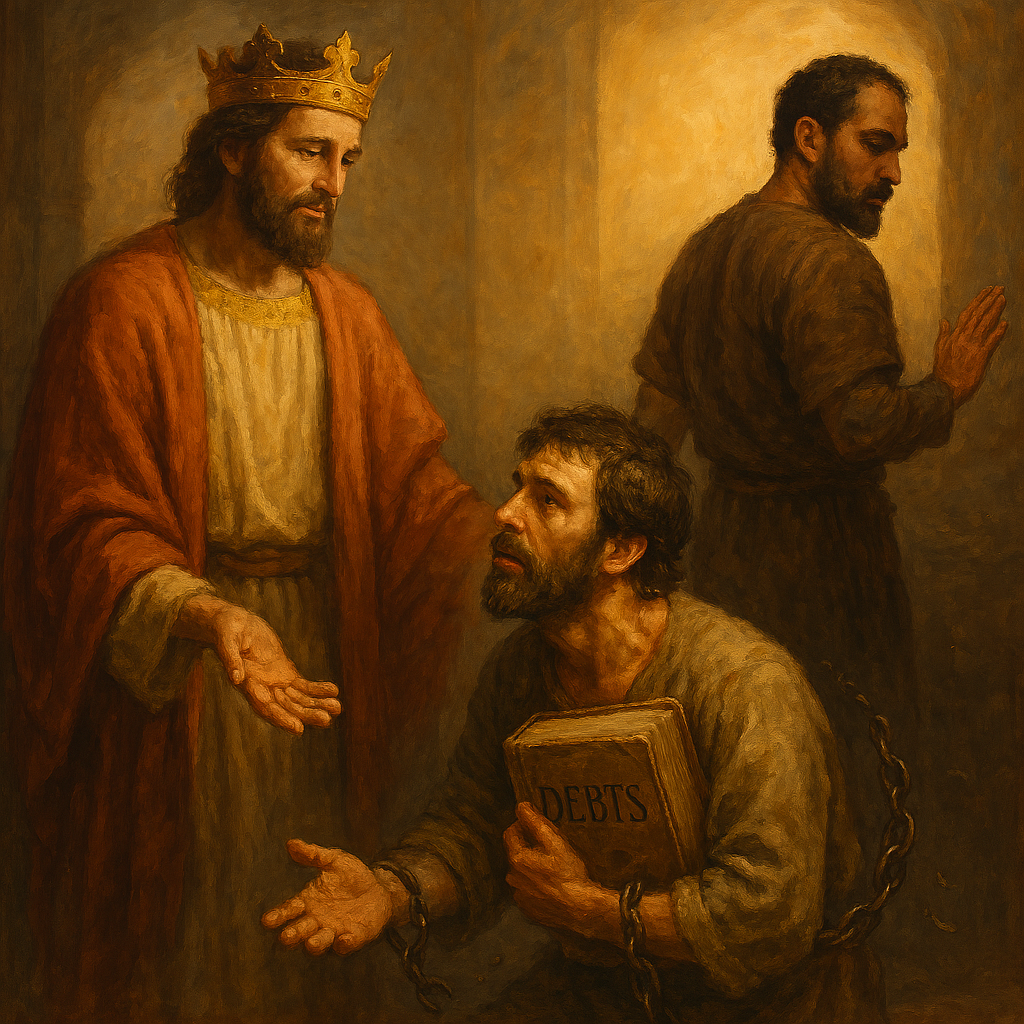
Forgiveness does not necessarily equal reconciliation. In our parable, a servant is forgiven a massive debt by the king yet refuses to extend forgiveness to another servant who owes him a small amount. When the king learns of this, he becomes enraged, retracts his forgiveness, and imprisons the first servant until the debt is settled, which essentially means forever.
The unforgiving servant fails to realize the importance of his own forgiveness and loses out on his life by not sharing that forgiveness with others.
If I am able to forgive anyone, it’s because I have been forgiven—by Jesus Christ through His sacrifice and by others. When I experience forgiveness, it feels as though my mistakes have been erased. The sensation of being forgiven is profound, but it isn’t something we attain independently.
By the parable's conclusion, Peter believes he grasps the lesson: treat others well, or face consequences. However, the true message is to treat others as the king has treated you. It isn’t about earning forgiveness or granting leniency for our benefit; it’s about acknowledging that we have already been forgiven.
Someone who deeply loves you has cleared your record, not for your past actions, but because they wish to uphold a relationship with you. That someone is Jesus Christ.
The film "Amazing Grace" portrays William Wilberforce and his efforts to abolish the slave trade in Great Britain. His mentor, John Newton, was formerly a slave trader who recognized the immorality of his actions. Following his conversion, he dedicated his life to God but still battled feelings of guilt. Newton encouraged Wilberforce in his campaign against slavery while yearning for God’s forgiveness for his past.
The film leaves viewers questioning whether he fully grasped God’s forgiveness, but it’s evident he later penned the renowned hymn, “Amazing Grace.”
During the crucifixion, as Jesus endured suffering, He looked at those mocking Him and chose to say, “Father, forgive them.” Amen.
Forgiven to Forgive: Embracing Christ’s Example
Discover the transformative power of forgiveness in Matthew 18:21-35. Explore Jesus’ teaching on limitless mercy, the parable of the unforgiving servant, and how embracing forgiveness strengthens relationships and reflects God’s grace. Join St. Timothy’s ACC in living out Christ’s call to forgive and be forgiven.
Matthew 18:21-35
King James Version
21 Then came Peter to him, and said, Lord, how oft shall my brother sin against me, and I forgive him? till seven times?
22 Jesus saith unto him, I say not unto thee, Until seven times: but, Until seventy times seven.
23 Therefore is the kingdom of heaven likened unto a certain king, which would take account of his servants.
24 And when he had begun to reckon, one was brought unto him, which owed him ten thousand talents.
25 But forasmuch as he had not to pay, his lord commanded him to be sold, and his wife, and children, and all that he had, and payment to be made.
26 The servant therefore fell down, and worshipped him, saying, Lord, have patience with me, and I will pay thee all.
27 Then the lord of that servant was moved with compassion, and loosed him, and forgave him the debt.
28 But the same servant went out, and found one of his fellowservants, which owed him an hundred pence: and he laid hands on him, and took him by the throat, saying, Pay me that thou owest.
29 And his fellowservant fell down at his feet, and besought him, saying, Have patience with me, and I will pay thee all.
30 And he would not: but went and cast him into prison, till he should pay the debt.
31 So when his fellowservants saw what was done, they were very sorry, and came and told unto their lord all that was done.
32 Then his lord, after that he had called him, said unto him, O thou wicked servant, I forgave thee all that debt, because thou desiredst me:
33 Shouldest not thou also have had compassion on thy fellowservant, even as I had pity on thee?
34 And his lord was wroth, and delivered him to the tormentors, till he should pay all that was due unto him.
35 So likewise shall my heavenly Father do also unto you, if ye from your hearts forgive not every one his brother their trespasses.