
Nothing better to grasp the spirit of the Church than to turn to the liturgical texts. This is most true of Passiontide and Holy Week.
A few points of interest.
- As the Church enters the period of mourning the divine Bridegroom, she puts on the widow’s garments. The commemoration of Christ’s suffering is expressed in various ways. The last remaining traces of joy are eliminated: the Gloria Patri of the Introit and other regular prayers and psalms. The prayers and readings relate the theme of suffering to that of baptism.
- One of the most striking changes in the Passiontide is that the crosses and statues are draped, as an outward sign of the Church’s inward sorrow. It is not difficult to understand why the wailing garments are placed over the statues, which could distract us from the meditations of the Passion. It is however quite enigmatic for the Christians today to understand why the crosses have to be veiled. Why is not the sorrowful Crucifix visible to our eyes so as to draw tears of devotion? Just the contrary would be more intelligible.
In fact, this veiling of the Cross is a relic from an ancient practice. When crosses, without the corpus, shone glorious with gold and precious stones (the crux gemmata), there was deep meaning in the practice of veiling their brilliance during the days when the bridegroom was taken away. The Church was putting on the widow’s weeds. This tiny detail is a clear symbol of a very different approach between ancient and modern Christianity. Today, popular piety proceeds to review Holy Week historically; it pictures with great fidelity the various scenes of the "bitter passion," it dissects all the feelings and thoughts of our suffering Savior, it analyzes the virtues displayed by the Lord at every step. "How shall I imitate Him… what can I learn from Him?" are its most important questions. Suffering is the great motive for amendment: "He died on the Cross for me, and I have offended Him so deeply."
The ancient Christians followed a different course. Of course, it also put Christ’s suffering up front, but it was aiming too at the purpose of the Passion. By His suffering, Christ redeemed us and made us children of God. And on what is the most tragic day of the whole year, on Good Friday, we lift our voices in jubilant song: "See, because of this wood joy has come into the whole world!" The early Christians were not so eager to speak of the bitter passion as of the beata passio, the happy or blessed passion. Perhaps a harmonious blending of the two mindsets is achieved on Good Friday. On that day of the great Sacrifice of the High Priest, the Church consumes the last of the Holy Sacrament: and the liturgy is mostly commemorative and historical. Yet, with this initial meditation of the historical passion of Our Lord, as the ceremony progresses, it has us rejoice before the unveiled cross, presented as the glorious trophy with the Redeemer having fulfilled His mission. We know what is coming on Easter morn and recall this glorious, joyful song to the Cross, to the Lord’s resurrection: Thy Cross, Lord, we adore! We praise and acclaim Thy holy resurrection.
Behold, through the wood of the Cross, Joy has come into the whole world.

The Lord Sees You: Sermon on the Widow of Nain
Before you cry out to God, before you find the words to pray — the Lord already sees you. A Trinity 16 sermon on Luke 7:11-17: Christ’s compassion that enters our grief and moves toward restoration.
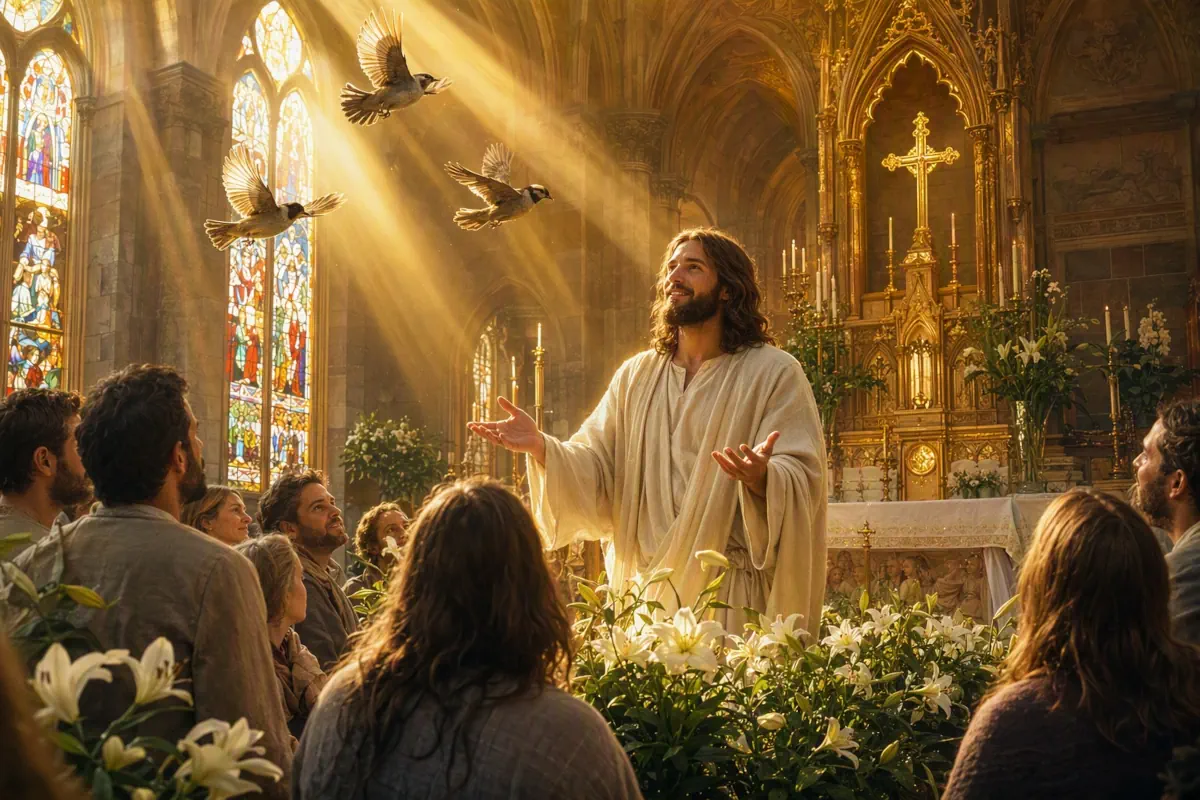
Trinity 15 Sermon: Trusting God Over Anxiety and Worry
Jesus says we cannot serve two masters — and anxiety itself can become one. This Trinity 15 sermon explores Matthew 6:24-34 and the call to trust God over worry.
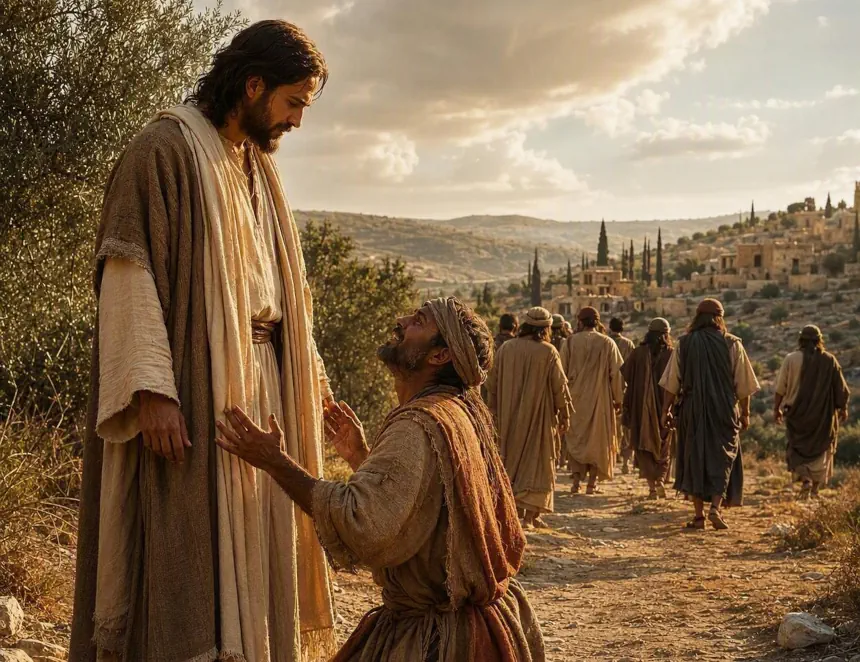
Thankfulness and Saving Faith: A Trinity 14 Reflection
Why did only one leper return to Jesus? In Luke 17:11-19, all ten lepers received physical healing, but only one returned to thank Christ. Fr. Dan explains that gratitude is more than good manners. It is the response of a heart that recognizes God’s mercy and seeks relationship with the Giver rather than simply enjoying the gift. Through thanksgiving, the Samaritan received not only cleansing but true spiritual wholeness.