
Today's reading is inspired by passages from Deuteronomy 8:10-18, 1 Chronicles 29:10-14, Matthew 25:14-30, and Romans 14:12.
Discover the power of financial confidence and learn how to manage your money wisely. God has bestowed upon you the responsibility to handle your finances with care and integrity.
In the Old Testament, the Israelites showed their gratitude by offering their abundance back to God.
Did you know that nearly two-thirds of Jesus' parables revolve around money and financial management? One such parable in the New Testament compares spiritual faithfulness to being a conscientious steward of wealth. Only the diligent graduates of God's Business School with their MBAs truly understood this lesson.
To be financially confident, one must prioritize managing money over reckless spending. The foolish person sees money as a means to indulge in instant gratification, living beyond their means and drowning in debt.
In contrast, the financially confident person recognizes that God is the ultimate provider and has a well-defined plan for their resources. They understand the importance of giving generously, saving wisely, and spending responsibly. By maintaining control over their finances and avoiding the allure of immediate gratification, they lay the foundation for a prosperous future.
Let us graduate from God's Business School with a strong understanding of biblical financial principles. With these principles as our guide, we become intelligent people who are respected and admired for our ability to manage God's entrusted wealth.
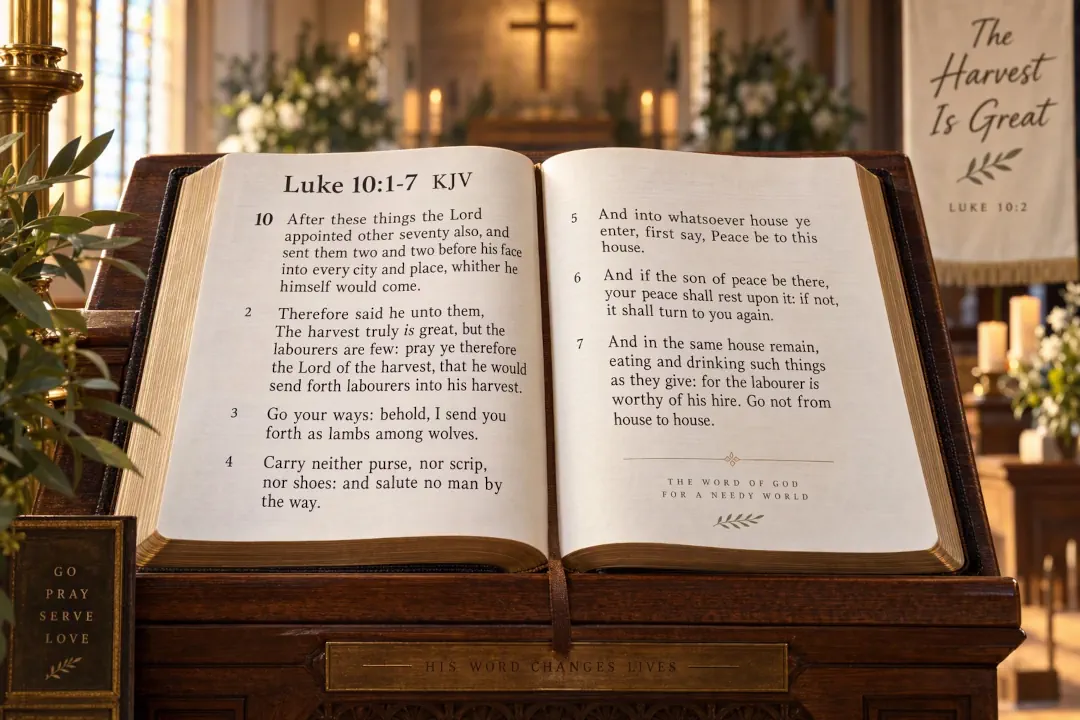
You Are the Seventy: A Feast of St. Luke Homily
Jesus didn’t just send the Twelve — He sent seventy ordinary disciples. Fr. Dan’s Feast of St. Luke homily on Luke 10:1–7 shows that you are among the seventy, and your first mission field is your own home. One word of peace can change everything.

Be of Good Cheer: Forgiveness and the Paralytic
We ask God to fix what we can see — the diagnosis, the broken relationship, the bad situation. But Jesus goes deeper. Before He heals the body, He speaks to the soul: “Son, be of good cheer; thy sins be forgiven thee.”

The Lord Sees You: Sermon on the Widow of Nain
Before you cry out to God, before you find the words to pray — the Lord already sees you. A Trinity 16 sermon on Luke 7:11-17: Christ’s compassion that enters our grief and moves toward restoration.