Palm Sunday, also called Passion Sunday in the Christian tradition, is the first day of Holy Week and the Sunday before Easter, commemorating Jesus Christ’s triumphal entry into Jerusalem. It is associated in many churches with the blessing and procession of palms (leaves of the date palm or twigs from locally available trees).
These special ceremonies took place toward the end of the 4th century in Jerusalem and are described in the travelogue Peregrinatio Etheriae (The Pilgrimage of Etheria). In the West, the earliest evidence of the ceremonies is found in the Bobbio Sacramentary (8th century).
During the Middle Ages, the ceremony for blessing the palms was elaborate. The procession began at one church and went to another in which the palms were blessed. Once the palms were blessed, the march returned to the church where it had originated for the liturgy singing. While singing, the Deacons would chant the Passion of Christ. However, after reforms of the Roman Catholic liturgies in 1955 and 1969, ceremonies were somewhat simplified to emphasize the suffering and death of Christ.
The day is now officially called Passion Sunday. The liturgy begins with a blessing and procession of palms. Still, prime attention is given to a lengthy reading of the Passion, with parts taken by the priest, lectors, and congregation. The palms are often taken home by the congregation members to serve as sacramentals (sacred signs of the sacraments). Some are burned the following year to serve as the ashes for Ash Wednesday.
In the Byzantine liturgy, the Eucharist on Palm Sunday is followed by a procession in which the priest carries the icon representing commemorating events. In the Anglican churches, some traditional ceremonies were revived in the 19th century. However, while celebrating the day without ritual ceremonies, most Protestant churches give palms increasing prominence.
Britannica, The Editors of Encyclopaedia. "Palm Sunday". Encyclopedia Britannica, https://www.britannica.com/topic/Palm-Sunday. Accessed 30 March 2023.
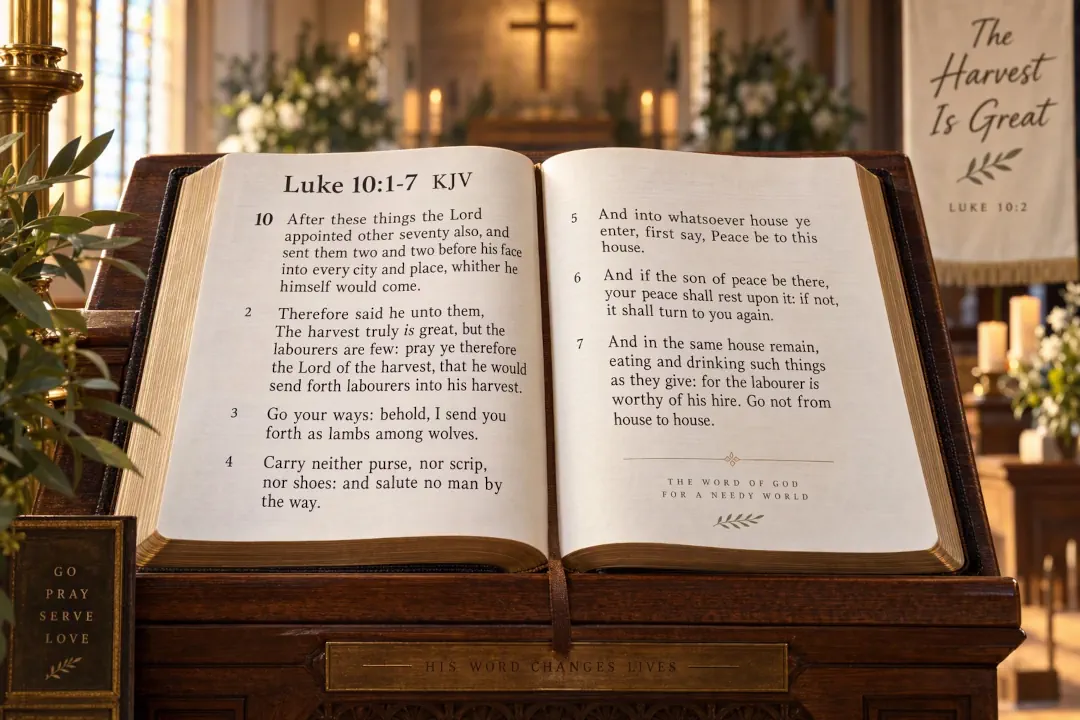
You Are the Seventy: A Feast of St. Luke Homily
Jesus didn’t just send the Twelve — He sent seventy ordinary disciples. Fr. Dan’s Feast of St. Luke homily on Luke 10:1–7 shows that you are among the seventy, and your first mission field is your own home. One word of peace can change everything.
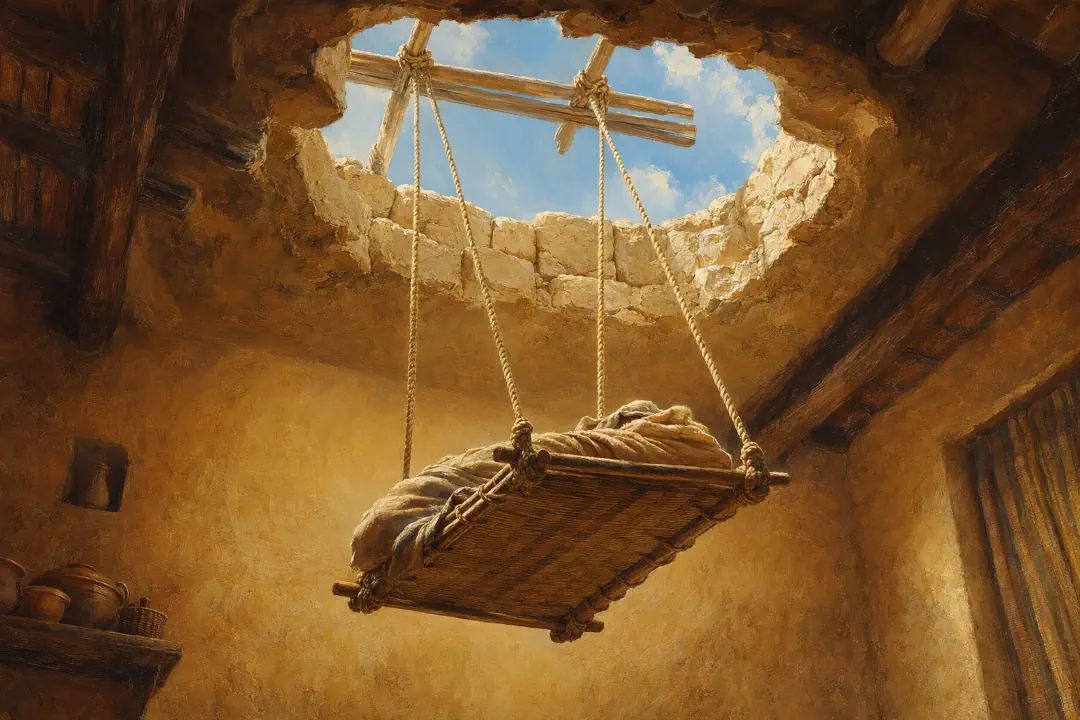
Be of Good Cheer: Forgiveness and the Paralytic
We ask God to fix what we can see — the diagnosis, the broken relationship, the bad situation. But Jesus goes deeper. Before He heals the body, He speaks to the soul: “Son, be of good cheer; thy sins be forgiven thee.”
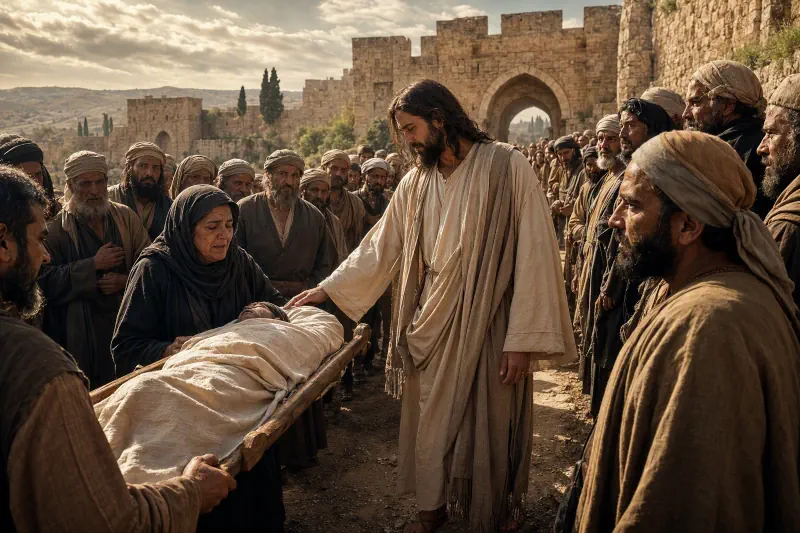
The Lord Sees You: Sermon on the Widow of Nain
Before you cry out to God, before you find the words to pray — the Lord already sees you. A Trinity 16 sermon on Luke 7:11-17: Christ’s compassion that enters our grief and moves toward restoration.