Lent in the Anglican Catholic Tradition
Lent in the Anglican Catholic tradition is a sacred season of repentance, prayer, and renewal beginning on Ash Wednesday…
Meaning of Lent
Lent is a season set aside for repentance—not a wallowing in shame, but a sober recognition that sin separates us from God and that our reconciliation came at great cost. As the text reminds us, shame has its place, but feeling shame over sin is not the same thing as repentance, for even our obedience can become twisted into pride if we are not watchful.
True repentance seeks not only cleansing from sin but also freedom from the shame that clings to it. It calls for a 180-degree change of direction, a turning of the heart shaped by genuine brokenness. Still, repentance begins with an honest acknowledgment of sin and a sincere commitment to change.
For that reason, it is spiritually dangerous to confuse Lent with a season for self-improvement resolutions. Lent is not meant to reinforce personal goals—whether losing weight, giving up pornography, or increasing charitable giving. Instead, Lent invites us to contemplate what our Lord truly accomplished for us on the Cross.
Resolutions tend to center on the self: on self-set goals, self-reliance, and self-direction. They can even mask a subtle rebellion against God’s purposes, forgetting that our bodies are His temple (1 Corinthians 3:16; 6:19) and His workmanship (Isaiah 64:8). By contrast, Lent directs our gaze away from ourselves and toward Christ.
This season is an opportunity to lay down the burden of self-determination and instead listen for the voice of God. Where He leads may be far more demanding than any resolution we could craft—and that is precisely where grace meets us. Lent reminds us that we accomplish nothing by our own strength. As Scripture teaches, only the grace of God is sufficient (2 Corinthians 12:9).
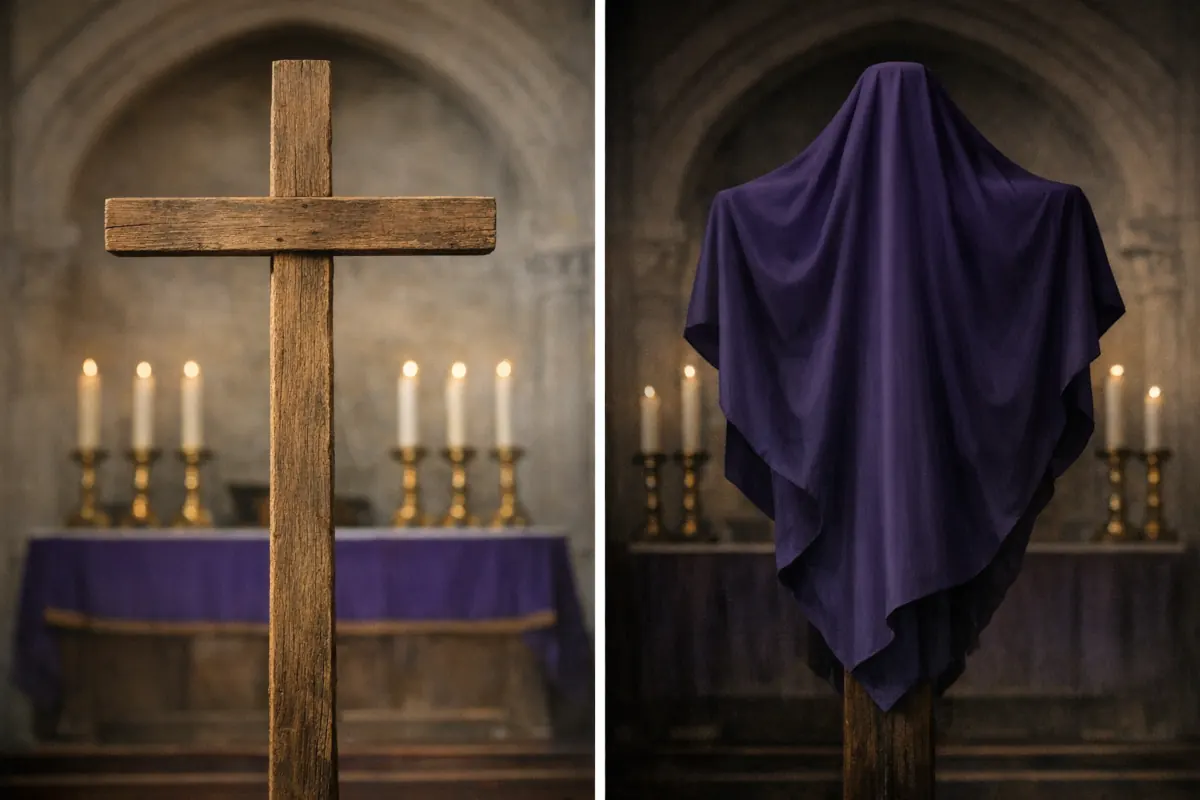
The Cross Without a Veil (or with a Dark Veil Near Passiontide)
A plain wooden cross, unadorned, is one of the most powerful Lenten images. Near Passiontide, a veiled cross (in purple or black) also conveys mystery, sorrow, and anticipation of Good Friday.
1 Corinthians 3:16
King James Version
16 Know ye not that ye are the temple of God, and that the Spirit of God dwelleth in you?
1 Corinthians 6:19
King James Version
19 What? know ye not that your body is the temple of the Holy Ghost which is in you, which ye have of God, and ye are not your own?
Isaiah 64:8
King James Version
8 But now, O Lord, thou art our father; we are the clay, and thou our potter; and we all are the work of thy hand.
2 Corinthians 12:9
King James Version
9 And he said unto me, My grace is sufficient for thee: for my strength is made perfect in weakness. Most gladly therefore will I rather glory in my infirmities, that the power of Christ may rest upon me.