
Twelfth Sunday after Trinity
Rev. Canon Dr. Robert Crouse
The Holy Scriptures abound in stories of miracles, from the beginning to the end, from the first instant of creation, when God called all things out of nothingness, when the Spirit moved upon the face of the waters, and God said, "Let there be light." [Gen.1] From the beginning to the end, when God will make a new heaven and a new earth: "And I, John, saw the holy city, the new Jerusalem, coming down from God out of heaven, prepared as a bride adorned for her husband...And he that sat upon the throne said, Behold, I make all things new." [Rev. 21] From beginning to end, miracles of creation and re-creation. "I am Alpha and Omega, which was, and which is to come, the Almighty." [Rev. 1:8]
And between the beginning and the ending, there is the on-going miracle of existence and life and thought, for not an atom of creation and not a fragment of conscious life could for one instant continue if it were not sustained by that eternal thinking and willing which is God's providence. Even in our folly and perversity, we are held in life. "It is by the Lord's mercy that we are not consumed; for his compassions fail not, they are new every morning." The celestial orbs proclaim that providence: In reason's ear they all rejoice,
And utter forth a glorious voice, Forever singing, as they shine, 'The hand that made us is Divine.'" [Joseph Addison, Paraphrase of Psalm 19]
All that is miracle: the being and acting of God in the world: and it is in the context of that recognition that we should understand all the miracle stories in the Scripture. But the stories of the miracles of Jesus, have still deeper dimensions which we ought to consider.
Jesus' miracles are signs of God's presence and power in him, the divine Son and Messiah. Remember how when John the Baptist, in prison, heard about the works of Christ, he sent two of his disciples to ask Jesus, Art thou he that should come or do we look for another? And Jesus answered and said unto them, Go and show John again those things which ye do hear and see: the blind receive their sight, and the lame walk, the lepers are cleansed, and the deaf hear, the dead are raised up and the poor have the Gospel preached to them. [Matt. ll.2f] The miracles are signs of Christ's messiahship and the coming of God's Kingdom.
But the miracles of Jesus have yet a further dimension, when our attention is focused not on the miraculous deed itself, but on its spiritual significance. Thus, Jesus cured the blind and the deaf and the dumb, thereby signifying his power to open dull minds to the truth of God, and to rouse dumb spirits to speak God's praise. He feeds the hungry multitude, and shows that he is the true bread, the word of God, to nourish fainting souls. He heals the lame and shows God's power to speed our pilgrimage to him. He stills the stormy seas of our confusions and despairs. He heals the sick and raises the dead, and thereby shows that he is our re-birth, our health, our resurrection to new and endless life in the Spirit.
Because the miracles are manifestations of the presence and saving power of God in Christ, we read the stories in the season of Epiphany: they manifest the power and wisdom of God for our salvation. But we read them again in the Trinity season, because they have yet a further dimension of meaning. As the first half of our Christian year sets before us what God in Christ has done for our salvation, so this second half of the year, this long Trinity season, is concerned with the realizing of that salvation in us, in the building up our spiritual life as individuals and as community. That is the point of all our Scripture lessons in this season, and that is a dimension of the miracle stories: they are not only signs of what God has done and does for us, but also indicators of how the grace of God is fruitfully received in our lives.
Finally, we should consider for a moment the implication of these stories for our own spiritual life, and really, the practical application is pretty obvious: we come as outsiders, as aliens, with nothing in our hands to purchase our salvation, but only trusting in God's mercy to heal the maladies of our sinful souls; we come, putting aside all pride of independence, and all preconception as to how God is to heal us, trusting only in his all-seeing wisdom. And we are truly healed when we live our lives always to the glory of God, in thanksgiving.
As I spoke of in my sermon, part of the reason I love Baptisms is that in the face of a child, we see the unquestioning trust we all should have in Jesus Christ. No questions, just security in knowing that we are loved and cared for by Him, as children know that of those who love and care for them. Absolute trust is the greatest measure of our faith for when we trust totally, our faith has no boundaries. That limitless faith becomes a miracle in our lives and as our Lord opened the eyes and ears of the sightless and those who could not hear, so too He opens our own lives in a similar fashion. He also loosens our tongue to speak, and to share His message with those who have no faith, no trust and no hope. All of us have been hungry in our lives, but that is hunger easily cured with a morsel of food. But what of the spiritually hungry? What of those with no hope? For them dead is dead and they become like the living dead, with nothing to look forward to. Think of the joy when the beggar of the Gospel life suddenly changed. Think of the joy when through us with the power of the Holy Spirit, despair is turned to joy!
Let us see in the miracles of our lives the power and the presence of God. Let us also witness to those whose need is great. The family of Christ has no boundaries. Let us touch the eyes and ears of those who are crippled, as our Savior has done for us. AMEN!
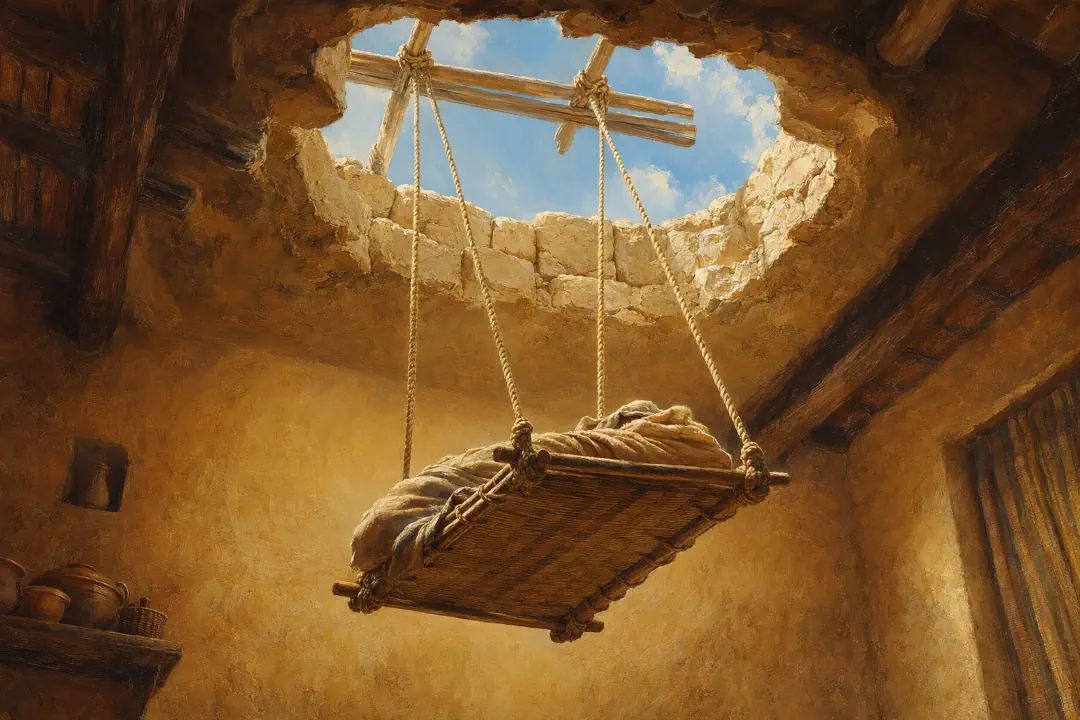
Be of Good Cheer: Forgiveness and the Paralytic
We ask God to fix what we can see — the diagnosis, the broken relationship, the bad situation. But Jesus goes deeper. Before He heals the body, He speaks to the soul: “Son, be of good cheer; thy sins be forgiven thee.”
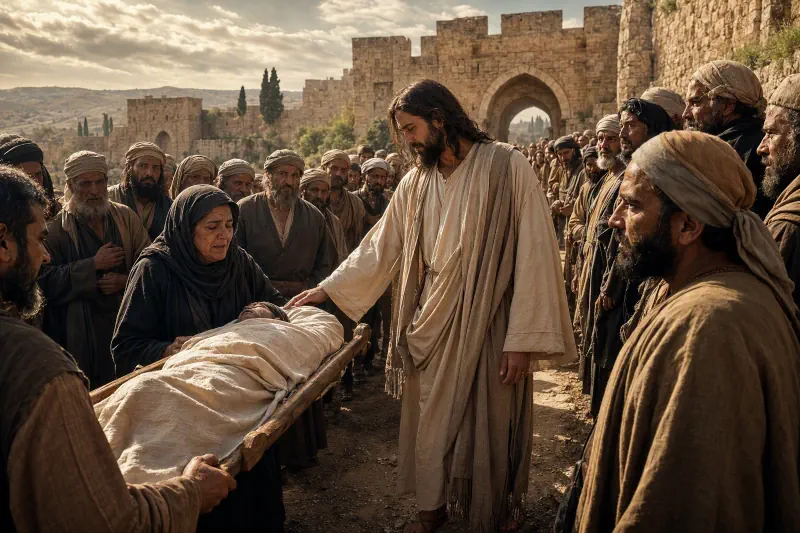
The Lord Sees You: Sermon on the Widow of Nain
Before you cry out to God, before you find the words to pray — the Lord already sees you. A Trinity 16 sermon on Luke 7:11-17: Christ’s compassion that enters our grief and moves toward restoration.
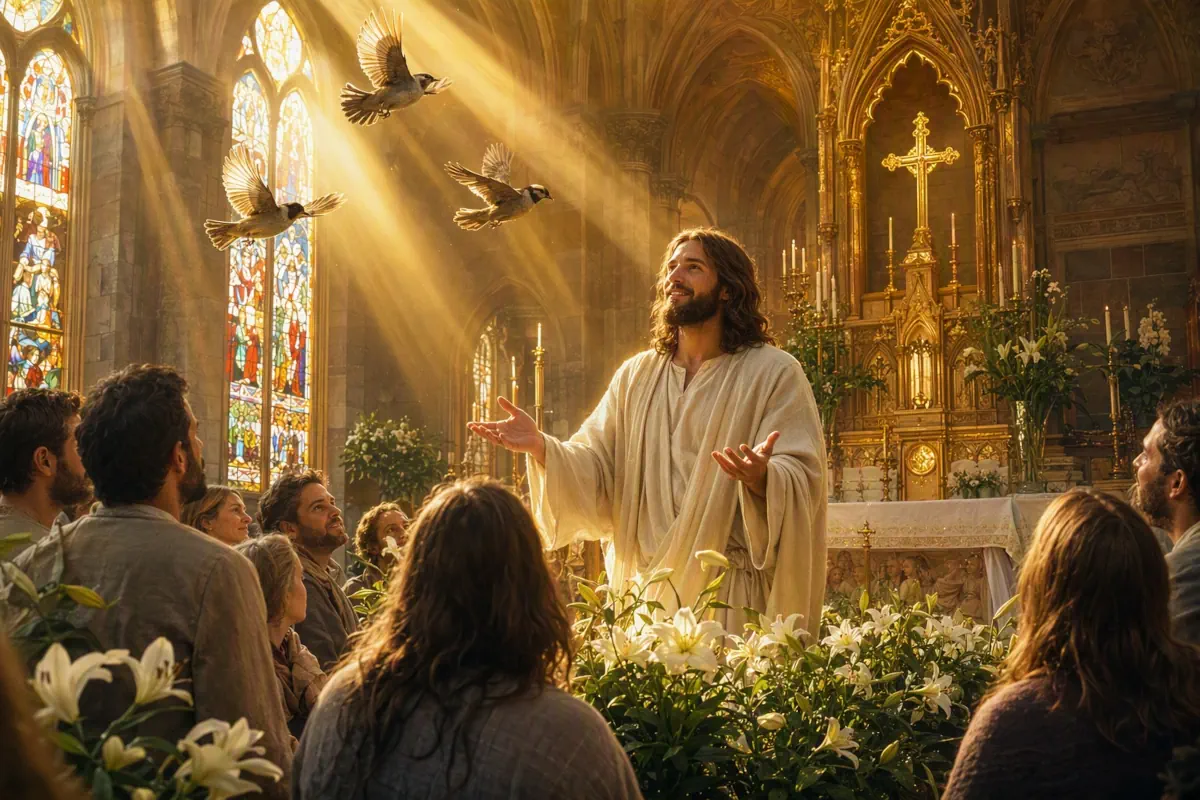
Trinity 15 Sermon: Trusting God Over Anxiety and Worry
Jesus says we cannot serve two masters — and anxiety itself can become one. This Trinity 15 sermon explores Matthew 6:24-34 and the call to trust God over worry.