Fifteenth Sunday after Trinity
Galatians 6:11 | St. Matthew 6:24
"Seek ye first the kingdom of God."
The Gospel lesson appointed for this fifteenth Sunday after Trinity represents the climax of the teaching of Jesus in the Sermon on the Mount, recorded in Chapters 5-7 of St. Matthew's Gospel: the simplest and most difficult of all sermons. Simple, by virtue of its uncompromising directness: you cannot serve two masters; you cannot serve God and mammon; you cannot serve God and riches. Therefore, do not be anxious about food and drink and clothing. The whole of nature rests upon the Providence of God: consider the birds of the air and the lilies of the field. How much more readily should conscious, rational beings rest upon that Providence! Which of you, by taking thought, can add one cubit to his stature? God feeds the birds and clothes the lilies: why then should you be anxious? Your heavenly Father knows your needs.
It is a simple and direct prescription, and its appeal is winsome. In the maelstrom of credit cards and power bills and tax credits and parking tickets and cholesterol counts and acid rain and nuclear fallout, and all the rest, how lovely it is to consider the birds and the lilies. They toil not, neither do they spin, yet even Solomon, in all his glory, was not arrayed as one of these. It is simple, and direct, and appealing; but is it possible? Could it be possible? It is simple, no doubt, for sentiment, but Oh, so immensely difficult in actuality. "O ye of little faith," says Jesus. "Seek ye first God's kingdom, and all these things shall be added unto you."
The counsels of the Sermon on the Mount are counsels of perfection, and much of the history of the Church consists of the search for and striving after that simple perfection of life. In ancient times, St. Mathew, whose festival we keep later this week, left the receipt of custom to follow the steps of a wandering preacher. St. Anthony the hermit gave away all his possessions, and betook himself to the deserts of Egypt, renouncing the world of getting and spending. St. Francis of Assisi, son of an Italian nobleman, embraced Lady Poverty, that he might live as the birds and the lilies simply in the Providence of God. The examples are endless, and manifold in their character. "Seek ye first the kingdom of God."
But these counsels of perfection, what can they mean for us? Are they some kind of beautiful and romantic, but impossible dream? Jesus makes it clear that his counsels are for here and now. Listen to what he says at the conclusion of the sermon: Whosoever heareth these sayings of mine and doeth them, I will liken him to a wise man, which built his house upon a rock: and the rain descended, and the floods came, and the winds blew and beat upon that house, and it fell not, for it was founded upon a rock.
What Jesus intends is a direct and eminently practical lesson about life here and now. And that portion of his sermon which is today's Gospel lesson is an eminently practical lesson about our involvement with this world's concerns and this world's goods. We are so easily seduced into regarding these things as ends in themselves. That is what it means to serve Mammon. Today's Gospel would remind us that the things of this world, however good, are not ends--but means: means towards an end which is spiritual and eternal--the knowledge and love of God, God's kingdom and his righteousness.
Mammon is a false God, and the service of Mammon is idolatry. And it is the essence of idolatry to trust the things of the world as though they were a final and ultimate significance. Idolatry is the worship of worldly things, and it is a subtle, but constant, ever-present danger to the spiritual lives of all of us. That's what St. Paul has in mind, when he says to the Galatians, in today's Epistle lesson: But God forbid that I should glory, save in the cross of our Lord Jesus Christ, by whom the world is crucified unto me, and I unto the world.
The point is not that we should forge or escape from the toils and the satisfactions and the trials of life in this world, but that we should see all these things in their limitations, in the perspective of the spiritual end they serve. Who by taking thought can add one cubit to his stature? Life is more than reaping and gathering into barns. The point is that we should see our life and our labours in the context of the Providence of God--that "perpetual mercy" of which today's Collect speaks--that Providence which moves all things firmly and sweetly to their divinely appointed end. And in that perspective, how foolish is all our anxiety.
Seek first God's kingdom, and in his eternal Providence, his perpetual mercy, all will be well.
The Rev. Canon Dr. Robert Crouse
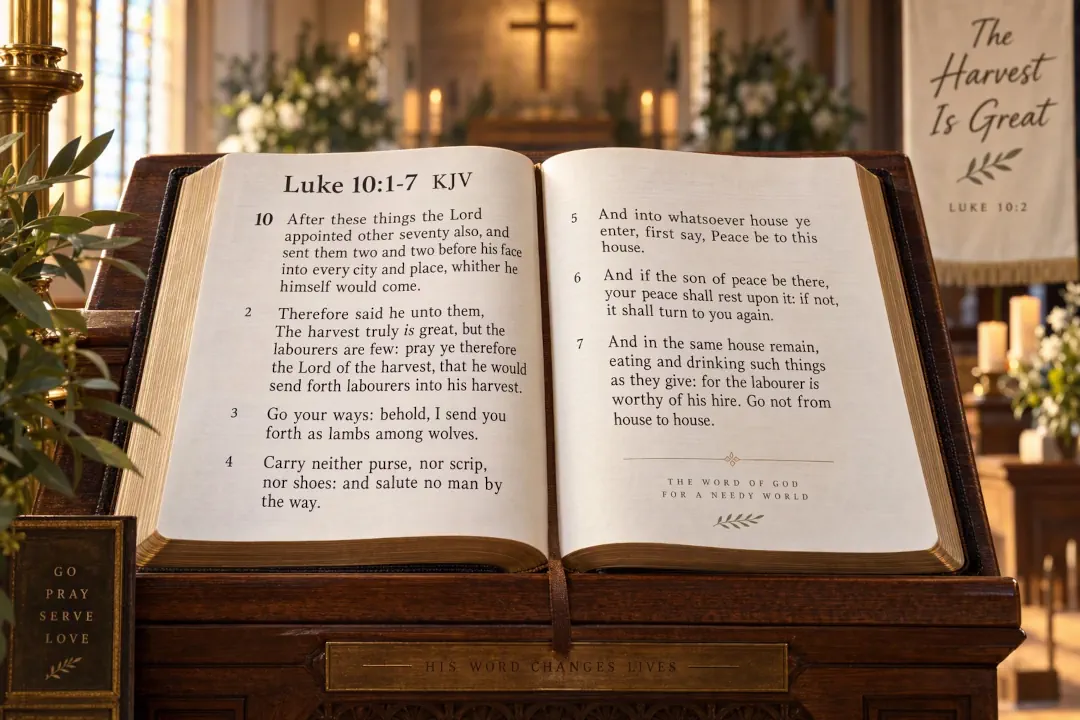
You Are the Seventy: A Feast of St. Luke Homily
Jesus didn’t just send the Twelve — He sent seventy ordinary disciples. Fr. Dan’s Feast of St. Luke homily on Luke 10:1–7 shows that you are among the seventy, and your first mission field is your own home. One word of peace can change everything.
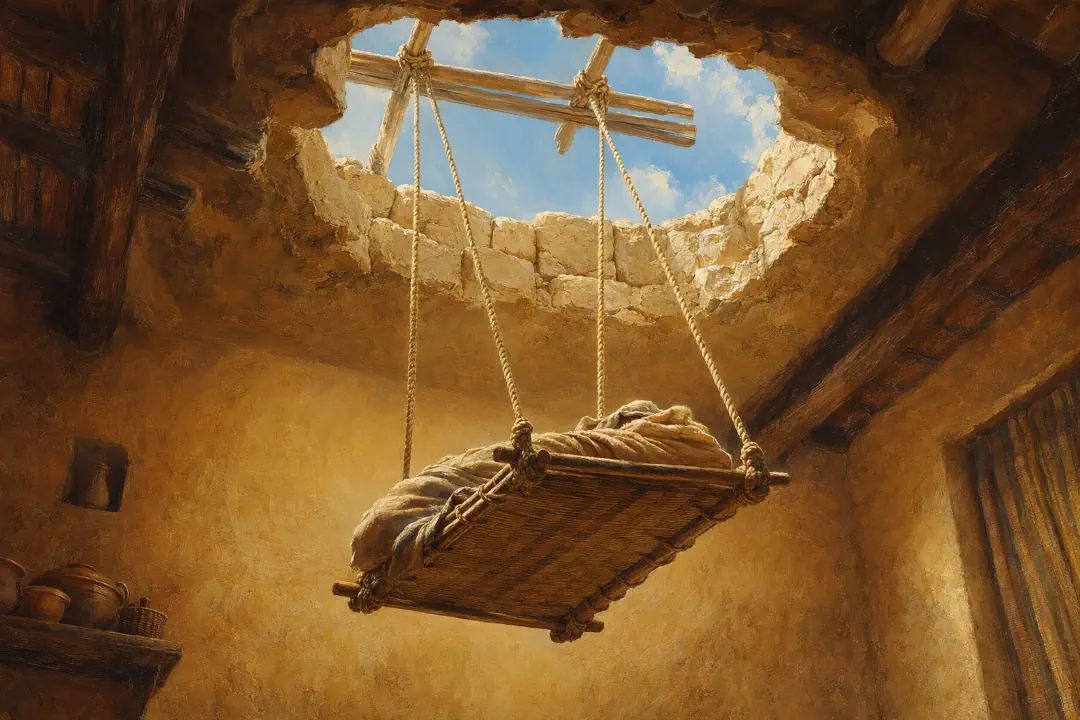
Be of Good Cheer: Forgiveness and the Paralytic
We ask God to fix what we can see — the diagnosis, the broken relationship, the bad situation. But Jesus goes deeper. Before He heals the body, He speaks to the soul: “Son, be of good cheer; thy sins be forgiven thee.”
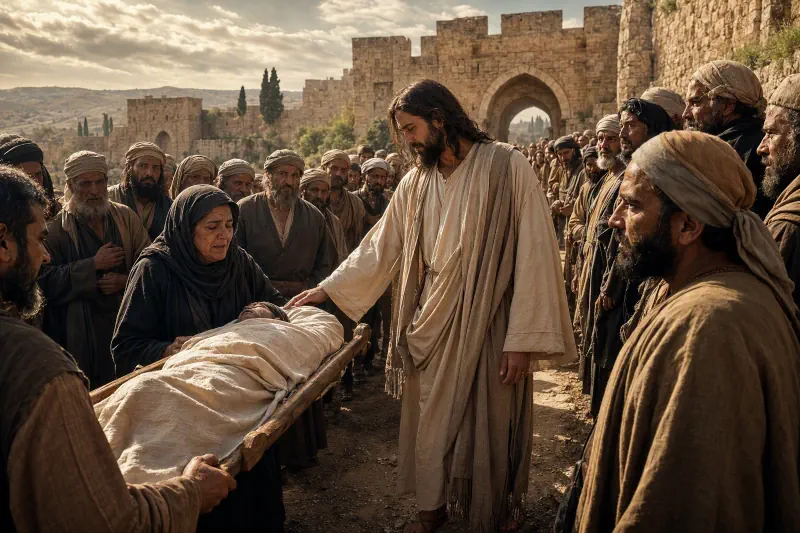
The Lord Sees You: Sermon on the Widow of Nain
Before you cry out to God, before you find the words to pray — the Lord already sees you. A Trinity 16 sermon on Luke 7:11-17: Christ’s compassion that enters our grief and moves toward restoration.