
The altar of repose is a temporary altar where the Communion hosts consecrated on Maundy Thursday during the Mass of the Lord's Supper are placed, or "reserved", for use on the following day, Good Friday.
Good Friday is the day we commemorate Christ's Death, followed by the Eater Vigil on Saturday and the commemoration of Christ's death on Easter Sunday.
Communion hosts thus cannot be consecrated, and any hosts used on Good Friday or for viaticum for the dying must have been consecrated beforehand. The Altar and meditation area represents the Garden of Gethsemane, where Jesus prayed the night He was arrested. After stripping the main Altar, the Sacrament is transferred by a procession to the Altar of Repose. This procession typically occurs during the reading of Psalm 22.
This tradition can be found in Roman Catholic, Catholic, Anglican (especially Anglo-Catholic), and some Lutheran churches. The decoration of the Altar of repose should be unique: at least several candles or lamps, and preferably more, should burn around it and should be tastefully arranged with flowers, drapes, refined cloths, carpets, and use of subdued electric lighting to create the necessary ambiance of silence and meditation. Spending some quiet time at the Altar in mediation and prayer is traditional. Finally, it is processed back into the church's main Altar on Good Friday for the Mass of the Pre-Sanctified, where it is all consumed.
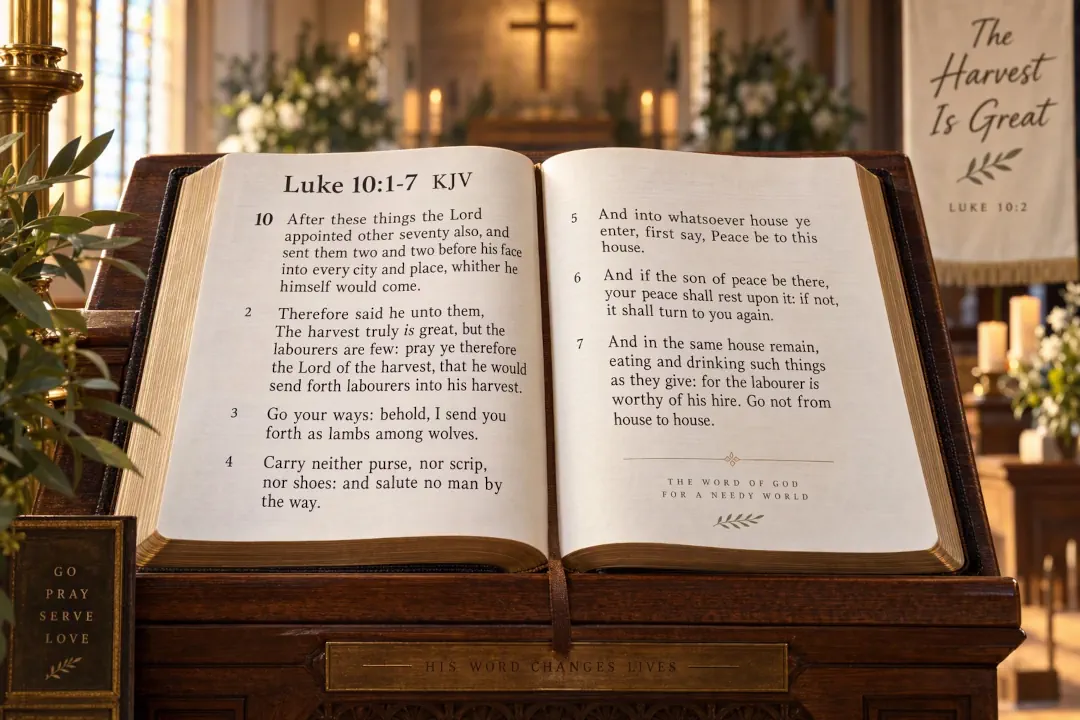
You Are the Seventy: A Feast of St. Luke Homily
Jesus didn’t just send the Twelve — He sent seventy ordinary disciples. Fr. Dan’s Feast of St. Luke homily on Luke 10:1–7 shows that you are among the seventy, and your first mission field is your own home. One word of peace can change everything.

Be of Good Cheer: Forgiveness and the Paralytic
We ask God to fix what we can see — the diagnosis, the broken relationship, the bad situation. But Jesus goes deeper. Before He heals the body, He speaks to the soul: “Son, be of good cheer; thy sins be forgiven thee.”

The Lord Sees You: Sermon on the Widow of Nain
Before you cry out to God, before you find the words to pray — the Lord already sees you. A Trinity 16 sermon on Luke 7:11-17: Christ’s compassion that enters our grief and moves toward restoration.